Courses Taught
- MGMT 655 - Core MBA Global Strategic Management Course, Wharton
- MGMT 955 - PhD Seminar in Multinational Management, Wharton
- MGMT 871 - Elective MBA Course in Multinational Management, Wharton
- MGMT 205 - Elective Undergraduate Course in Multinational Management, Wharton
- MGMT 111 - Core Undergraduate International Business Course, Wharton
- IBUS 3001 - Core Undergraduate International Business Course, GWU
- IBUS8363 - PhD Seminar in International Management, GWU

|
|
Teaching Experience and Approach:
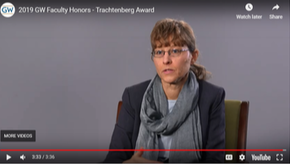
I have a deep and on-going commitment to teaching and I am honored to have been selected (by my students and faculty peers) to receive the George Washington University Trachtenberg Prize for Teaching Excellence in 2019.
In my courses, I seek to expose students to the numerous choices that are available to the managers of multinational firms across product and geographic markets. By focusing on case studies of firms at different stages of international expansion, with different firm resources, from different home countries and who invest in different locations, I highlight much of what I try to understand in my own research in the classroom. In the last several years, I have been incorporating more and more of my research in my teaching and have received enthusiastic student responses. Topics such as divestment from foreign markets, global integration and global innovation by multinational corporations (MNCs) are not covered well in textbooks. By using my own research, I am able to push students beyond the basic materials covered in international business and multinational management courses.
A. Teaching Philosophy:
My general approach to teaching is to try to actively engage students as much as possible in both lectures and case discussions no matter what course I am teaching. I constantly push students to clearly identify the assumptions underlying their responses in both their written work and in class discussions. If I can’t find a student who can do this, I can always use contrary case facts to force students to be more aware of the assumptions behind their reasoning. In general, I seek to develop the critical thinking capabilities of all students in my courses by pushing them to see alternate paths and logic, while at the same time, providing course tools and materials to help them to understand the complexity of the topics we are covering. Many of my students both tell me that they appreciate how much I push them in my courses and keep in touch with me after the course ends. I like to think that I have had a positive effect on many of my students – in fact, this is what motivates me to do my own grading and continually offer individual constructive comments to every student who takes my course.
B. Course Preps:
At George Washington University, I have created a core undergraduate Introduction to International Business class that has been oversubscribed since I started teaching it. From several years of teaching PhDs, MBAs and undergraduates, I have figured out what works well for me. I have moved away from using Harvard case studies (where answers are always posted on the web somewhere) and now write many of my own cases for graded student assignments. I really want students to learn not only about important topics that impact international business, but also about how to think critically about the assumptions underlying many of their responses to case questions. I try to give students the tools they need while also giving them incentives to thoroughly prepare class materials before they enter the classroom. I find that most students rise to the challenge and become very interested and engaged in many of the topics and firms I cover in class.
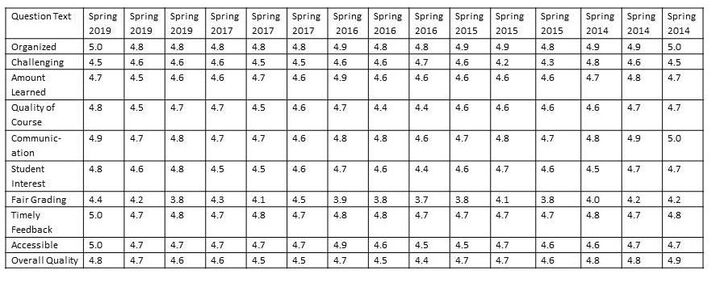
C. Student Evaluations (Three sections each year, Scale is 0-5, with 5.0 the highest)
I have a deep and on-going commitment to teaching and I am honored to have been selected (by my students and faculty peers) to receive the George Washington University Trachtenberg Prize for Teaching Excellence in 2019.
In my courses, I seek to expose students to the numerous choices that are available to the managers of multinational firms across product and geographic markets. By focusing on case studies of firms at different stages of international expansion, with different firm resources, from different home countries and who invest in different locations, I highlight much of what I try to understand in my own research in the classroom. In the last several years, I have been incorporating more and more of my research in my teaching and have received enthusiastic student responses. Topics such as divestment from foreign markets, global integration and global innovation by multinational corporations (MNCs) are not covered well in textbooks. By using my own research, I am able to push students beyond the basic materials covered in international business and multinational management courses.
A. Teaching Philosophy:
My general approach to teaching is to try to actively engage students as much as possible in both lectures and case discussions no matter what course I am teaching. I constantly push students to clearly identify the assumptions underlying their responses in both their written work and in class discussions. If I can’t find a student who can do this, I can always use contrary case facts to force students to be more aware of the assumptions behind their reasoning. In general, I seek to develop the critical thinking capabilities of all students in my courses by pushing them to see alternate paths and logic, while at the same time, providing course tools and materials to help them to understand the complexity of the topics we are covering. Many of my students both tell me that they appreciate how much I push them in my courses and keep in touch with me after the course ends. I like to think that I have had a positive effect on many of my students – in fact, this is what motivates me to do my own grading and continually offer individual constructive comments to every student who takes my course.
B. Course Preps:
At George Washington University, I have created a core undergraduate Introduction to International Business class that has been oversubscribed since I started teaching it. From several years of teaching PhDs, MBAs and undergraduates, I have figured out what works well for me. I have moved away from using Harvard case studies (where answers are always posted on the web somewhere) and now write many of my own cases for graded student assignments. I really want students to learn not only about important topics that impact international business, but also about how to think critically about the assumptions underlying many of their responses to case questions. I try to give students the tools they need while also giving them incentives to thoroughly prepare class materials before they enter the classroom. I find that most students rise to the challenge and become very interested and engaged in many of the topics and firms I cover in class.
C. Student Evaluations (Three sections each year, Scale is 0-5, with 5.0 the highest)
D. Student Comments from Course Evaluations:
1.) Effective Teaching:
"This was the best course I have taken at GW. I gained critical thinking skills that are not taught often enough in any courses here."
"I liked how the content learned went from macro perspective to micro perspective as we went on, it made sense and helped understand the thought process behind analyzing firms"
"This was one of the most rewarding classes I've taken at GW. Although it was very demanding in terms of readings and workload, Professor Berry is one of the best professors I've had at GW so far. She really stimulated my interest and made me think critically about international business and how to analyze firms and the problems and challenges they face in different markets across the world."
"The structure and the teaching style. I think this course could have been taught in a manner where we were required to just read and memorize but Berry drove us to improve our critical thinking skills that will make us overall better students and people."
"One of the best / most engaging professors I've had at GWSB. Definitely can see why / how the IBUS program is ranked so high / known to be so high quality given this even as an intro course."
"Professor Berry is extremely engaging. Her enthusiasm about the subject really comes through and she is a fantastic teacher. She is one of the best professors I have had at GW and she was my favorite aspect about the course."
"Professor Berry is the best teacher I have had here at GW. She has inspired me to concentrate in international business."
"This was a very challenging course that taught me to think in yet another way, which is the point of college I think. It was well-organized, and I liked how we would learn a concept and then have to apply to a specific firm right away the next class, which helped check if I really understood it or not."
"Loved the class. Very enthusiastic and knowledgeable professor. Very organized, by time of final paper I felt very confident with the material. Probably one of best classes in Gw so far!"
2.) Commitment to Student Learning:
"I really liked Professor Berry! She was definitely a tough grader, but I felt like she really cared about the students and tried to equip them to succeed as best she could. The class was well-organized and I appreciated how detailed the syllabus was. Professor Berry was enthusiastic and knew a great deal about the course material. I loved how discussion-based the class was; I don't think I've ever taken a class of this size that had so much discussion before, which I really appreciated."
"This is probably one of the best classes I have even taken at GW. I wanted to take one IBUS class before graduating and I think this one just takes the cake! Berry is super quirky, open to opinions, stimulates learning, is very specific and tough on students, pushes people, and is overall a wonderful professor. This class actually helped me with my upper level Strategy class so "two birds with one stone" really. Let Berry teach more classes, more students need to have her. She is the first professor who's class I'll probably do "OKAY" in but still appreciate the hell out of her because of how much she has taught me. I am a fan of her and the course she has designed."
"I Liked Professor Berry's enthusiasm and the writing component of the course. Writing forced me to apply the concept and I could see my progress in understanding the frameworks as I wrote more."
"I really enjoyed the style of instruction. Specifically, I like our class discussions, and how we are expected to come to class prepared, and knowledgeable about the subject matter."
"I believe the critical analysis skills that we learned from the course will be useful for the rest of our lives. Professor Berry is great and funny, and every class I left reflecting on how much I had learned in one sitting."
3.) High Standards and Expectations:
"Professor Berry expects a lot but gives you a wide variety of tools so that you can succeed if you put in the effort"
"I really appreciated that Professor Berry made the course material accessible and relevant to the field today. Professor Berry is clearly very knowledgeable about this field and is very passionate about the subject, which made me eager to learn more as well. I feel like a learned a lot of information and critical thinking skills that I can apply to my other courses."
"I really appreciated how organized Professor Berry was. We always knew exactly what was due and when. I also LOVE when teachers prohibit laptops during lecture. I think that's why there was always such a high level of discussion."
4.) Student Involvement and Intellectual Excitement
"The material was SO relevant and interesting. The discussions were lively. Professor Berry was truly one of the best professors I have had!"
"The class discussions really facilitated engagement with the material and forced students to step outside their comfort zones to practice communicating their opinions and justifying their answers. Overall, I had a positive experience in this course, and I hope to take another IBUS class in the future."
"I LOVED this course. I really liked how it was taught using frameworks and required students to apply the frameworks to the case studies. The class discussions stimulated interest and provoked learning, and the instructor's passion for the subject matter only enhanced my experience."
"Professor Berry is very engaging and she helps to make all of the material much more accessible even for non business students. The variety of materials was impressive and very interesting. It was a great course!"
"This was my most challenging and the most rewarding course and professor I have had at GWSB and I hope all of my ibus course are at this level of rigor. As an ibus major I feel prepared to continue to upper level ibus courses. This has also affected my career goals and I am now very interested in foreign market entry analysis and consulting."
"The material is extremely interesting and applicable, the professor rocks."
"I loved how excited Professor berry was about the subject, and how she was able to get everyone involved and thinking critically"
"Honestly one of the best courses I’ve taken at GW. Phenomenal professor , excellent course structure, so thorough. Very challenging extremely rewarding. hope to take more courses with Professor Berry"
5.) Available to Students:
"Professor Berry was very helpful and explained the concepts in a way that was easy for me to understand. She was willing to help when concepts were not grasped."
"Professor Berry actually cares about her students."
"I liked that this course was case based. This was my first case based course and I really enjoyed how she taught the material. It was very comprehensive and we went over the frameworks really in depth. If we had any questions she was really accessible."
"The professor was profound, extraordinarily helpful, and just a pleasure to have teach. The relevance of the cases in class while clearly applying the frameworks made this class very enjoyable and I'm confident that this has developed professional skills."
"The professor is really knowledgeable and really genuinely wants you to learn. I liked the "last chance" review day where you could ask any lingering questions before the final exam. I also liked the midterm."
1.) Effective Teaching:
"This was the best course I have taken at GW. I gained critical thinking skills that are not taught often enough in any courses here."
"I liked how the content learned went from macro perspective to micro perspective as we went on, it made sense and helped understand the thought process behind analyzing firms"
"This was one of the most rewarding classes I've taken at GW. Although it was very demanding in terms of readings and workload, Professor Berry is one of the best professors I've had at GW so far. She really stimulated my interest and made me think critically about international business and how to analyze firms and the problems and challenges they face in different markets across the world."
"The structure and the teaching style. I think this course could have been taught in a manner where we were required to just read and memorize but Berry drove us to improve our critical thinking skills that will make us overall better students and people."
"One of the best / most engaging professors I've had at GWSB. Definitely can see why / how the IBUS program is ranked so high / known to be so high quality given this even as an intro course."
"Professor Berry is extremely engaging. Her enthusiasm about the subject really comes through and she is a fantastic teacher. She is one of the best professors I have had at GW and she was my favorite aspect about the course."
"Professor Berry is the best teacher I have had here at GW. She has inspired me to concentrate in international business."
"This was a very challenging course that taught me to think in yet another way, which is the point of college I think. It was well-organized, and I liked how we would learn a concept and then have to apply to a specific firm right away the next class, which helped check if I really understood it or not."
"Loved the class. Very enthusiastic and knowledgeable professor. Very organized, by time of final paper I felt very confident with the material. Probably one of best classes in Gw so far!"
2.) Commitment to Student Learning:
"I really liked Professor Berry! She was definitely a tough grader, but I felt like she really cared about the students and tried to equip them to succeed as best she could. The class was well-organized and I appreciated how detailed the syllabus was. Professor Berry was enthusiastic and knew a great deal about the course material. I loved how discussion-based the class was; I don't think I've ever taken a class of this size that had so much discussion before, which I really appreciated."
"This is probably one of the best classes I have even taken at GW. I wanted to take one IBUS class before graduating and I think this one just takes the cake! Berry is super quirky, open to opinions, stimulates learning, is very specific and tough on students, pushes people, and is overall a wonderful professor. This class actually helped me with my upper level Strategy class so "two birds with one stone" really. Let Berry teach more classes, more students need to have her. She is the first professor who's class I'll probably do "OKAY" in but still appreciate the hell out of her because of how much she has taught me. I am a fan of her and the course she has designed."
"I Liked Professor Berry's enthusiasm and the writing component of the course. Writing forced me to apply the concept and I could see my progress in understanding the frameworks as I wrote more."
"I really enjoyed the style of instruction. Specifically, I like our class discussions, and how we are expected to come to class prepared, and knowledgeable about the subject matter."
"I believe the critical analysis skills that we learned from the course will be useful for the rest of our lives. Professor Berry is great and funny, and every class I left reflecting on how much I had learned in one sitting."
3.) High Standards and Expectations:
"Professor Berry expects a lot but gives you a wide variety of tools so that you can succeed if you put in the effort"
"I really appreciated that Professor Berry made the course material accessible and relevant to the field today. Professor Berry is clearly very knowledgeable about this field and is very passionate about the subject, which made me eager to learn more as well. I feel like a learned a lot of information and critical thinking skills that I can apply to my other courses."
"I really appreciated how organized Professor Berry was. We always knew exactly what was due and when. I also LOVE when teachers prohibit laptops during lecture. I think that's why there was always such a high level of discussion."
4.) Student Involvement and Intellectual Excitement
"The material was SO relevant and interesting. The discussions were lively. Professor Berry was truly one of the best professors I have had!"
"The class discussions really facilitated engagement with the material and forced students to step outside their comfort zones to practice communicating their opinions and justifying their answers. Overall, I had a positive experience in this course, and I hope to take another IBUS class in the future."
"I LOVED this course. I really liked how it was taught using frameworks and required students to apply the frameworks to the case studies. The class discussions stimulated interest and provoked learning, and the instructor's passion for the subject matter only enhanced my experience."
"Professor Berry is very engaging and she helps to make all of the material much more accessible even for non business students. The variety of materials was impressive and very interesting. It was a great course!"
"This was my most challenging and the most rewarding course and professor I have had at GWSB and I hope all of my ibus course are at this level of rigor. As an ibus major I feel prepared to continue to upper level ibus courses. This has also affected my career goals and I am now very interested in foreign market entry analysis and consulting."
"The material is extremely interesting and applicable, the professor rocks."
"I loved how excited Professor berry was about the subject, and how she was able to get everyone involved and thinking critically"
"Honestly one of the best courses I’ve taken at GW. Phenomenal professor , excellent course structure, so thorough. Very challenging extremely rewarding. hope to take more courses with Professor Berry"
5.) Available to Students:
"Professor Berry was very helpful and explained the concepts in a way that was easy for me to understand. She was willing to help when concepts were not grasped."
"Professor Berry actually cares about her students."
"I liked that this course was case based. This was my first case based course and I really enjoyed how she taught the material. It was very comprehensive and we went over the frameworks really in depth. If we had any questions she was really accessible."
"The professor was profound, extraordinarily helpful, and just a pleasure to have teach. The relevance of the cases in class while clearly applying the frameworks made this class very enjoyable and I'm confident that this has developed professional skills."
"The professor is really knowledgeable and really genuinely wants you to learn. I liked the "last chance" review day where you could ask any lingering questions before the final exam. I also liked the midterm."
Heading photo taken while visiting the Iguazu Falls, Brazil
